
Eberhard’s history is rooted in the heart of the Vallée de Joux, for centuries the cradle of Swiss watchmaking and home to the greatest craftsmen, who gradually transformed themselves into companies capable of delivering world-acclaimed masterpieces in their quest for the perfect chronograph. Could Eberhard have succeeded with the Pre-Extrafort?
Eberhard’s early days
In the years immediately following Eberhard’s founding, 1887, the Vallé de Joux was experiencing a period of great growth and expansion, propitiated by the advent of the Belle Epoque and a renewed desire on the part of the European bourgeoisie to show off precious and sought-after objects. The founder George-Emile Eberhard, born in Saint-Imier and in contact since his childhood with the brand that made the name of the town immortal in the world, Longines, started his own business at the age of 22 with his partner Henri Rosselet.
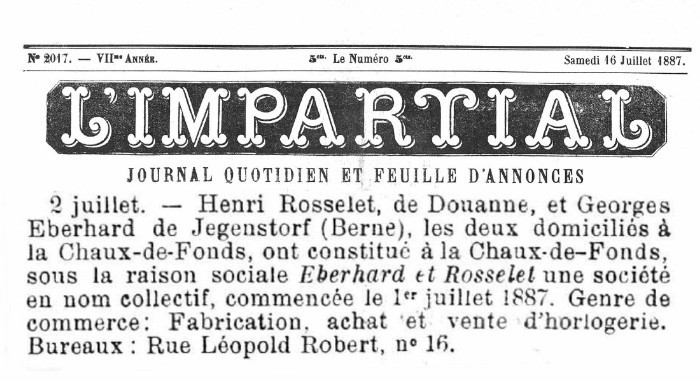
In spite of its young age, Eberhard not only prospered, but at the turn of the century it experienced robust growth. By 1909 it had established itself as one of Switzerland’s most distinguished manufacturers, thanks to its strong contacts with foreign customers. These contacts arose not only from the company’s excellent reputation, but also from George-Emile Eberhard’s ability to market his products abroad. Eberhard’s rapid rise culminated in the relocation of the manufacture to a sumptuous building in the center of La Chaux-de-Fonds. The latter was embellished with a turret at the top, making it, until the 1960s, the tallest building in the city, a perfect metaphor for the reputation of the brand.
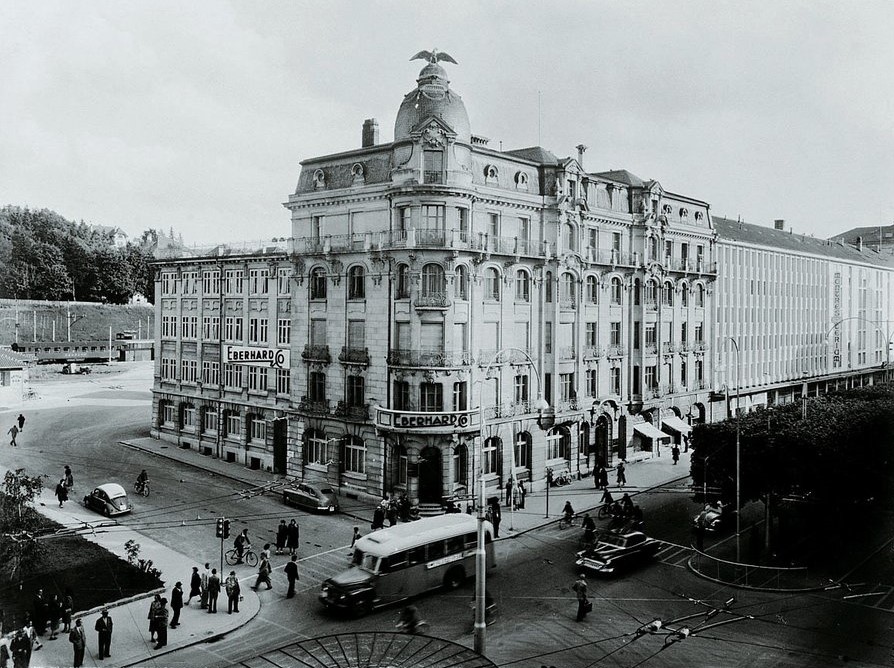
Today, the building is still in the company’s possession and houses its museum, which traces Eberhard’s journey through the 20th century. George-Emile Eberhard passed away in 1919, transferring his dream and vision to his two sons, Georges and Maurice.
The first creations
Among the many works with which Eberhard has gradually conquered a large slice of the market, chronographs certainly stand out, in both wrist and pocket models. In 1894 he introduced a timepiece that serves as a manifesto to fully understand the continuous race towards innovation and technical perfection. The watch in question, obviously a Lépine style pocket watch, has a porcelain dial and sumptuous Louis XV style hands. However, Eberhard’s technical acumen can be found in the calibre, which is equipped with a remontoire alarm function. The system of setting the time by means of the crown represented a real innovation, which resulted in a patent of which Eberhard is still proud today.

In 1910, it was the turn of a Savonette-style pocket chronograph, in which aesthetics and technique met, presenting us with a masterful example of early 20th century watchmaking. In this case, the chronograph complication is combined with the hour and quarter repeater, resulting in a model with a highly practical vocation and able to meet the needs of everyday life.

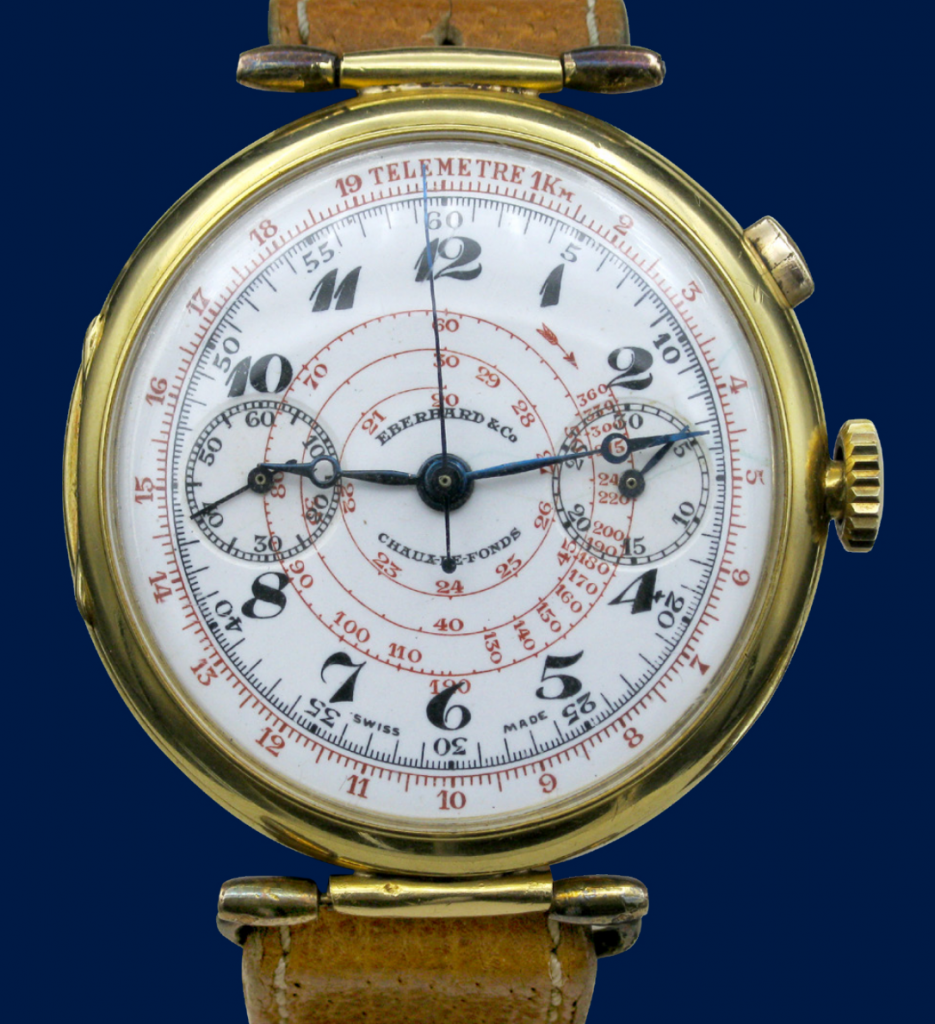
In 1919, as if to pay tribute to its recently deceased founder, Eberhard established itself as one of the promoters of wristwatches, launching a timepiece that embodies one of the first expressions of the chronograph in the guise in which we are accustomed to seeing it today. Specifically, it is a monopusher chronograph with porcelain dial, snail tachymeter scale and Breguet numerals. The contiguity with pocket watches of the same period is immediately apparent. In fact, the case has a very large diameter and the hinged lugs are barely noticeable. An object with a strong sporting connotation, with which Eberhard secured a privileged position in the newborn market of wristwatches, mostly intended for sports measurements.
However, it was in 1920 that the company fully demonstrated its pioneering spirit in the field of wristwatches, with a timepiece rarely replicated thereafter. It constitutes one of the oldest implementations of jumping hours on a wristwatch, rendered through two windows in the center of the dial. The first, reserved for the hours, is trapezoidal in shape and is located just above the chronograph seconds sphere, while the second window, circular, concerns the minutes and is located below.
The patent for the creation of the caliber was filed in 1905 by Adamir Sandoz-Boucherin and not by Eberhard, which acquired it only in 1906. The caliber on which the construction of the jumping hours hinged is the 15½-line Landeron, which is housed in a 40.5mm diameter gold-plated case.


The first of a new era: the advent of the “Pre-Extrafort” chronograph
In spite of Eberhard’s aforementioned farsightedness and technical ability, in 1935 the company presented a model destined to go down in history, as much for its design as for its historical value. In fact, the chronograph “Pre-Extrafort”, so called by collectors to distinguish it from the next model Extra-Fort, marks the abandonment of the canons typical of pocket watches to support a more modern aesthetic and in line with the needs of the public.
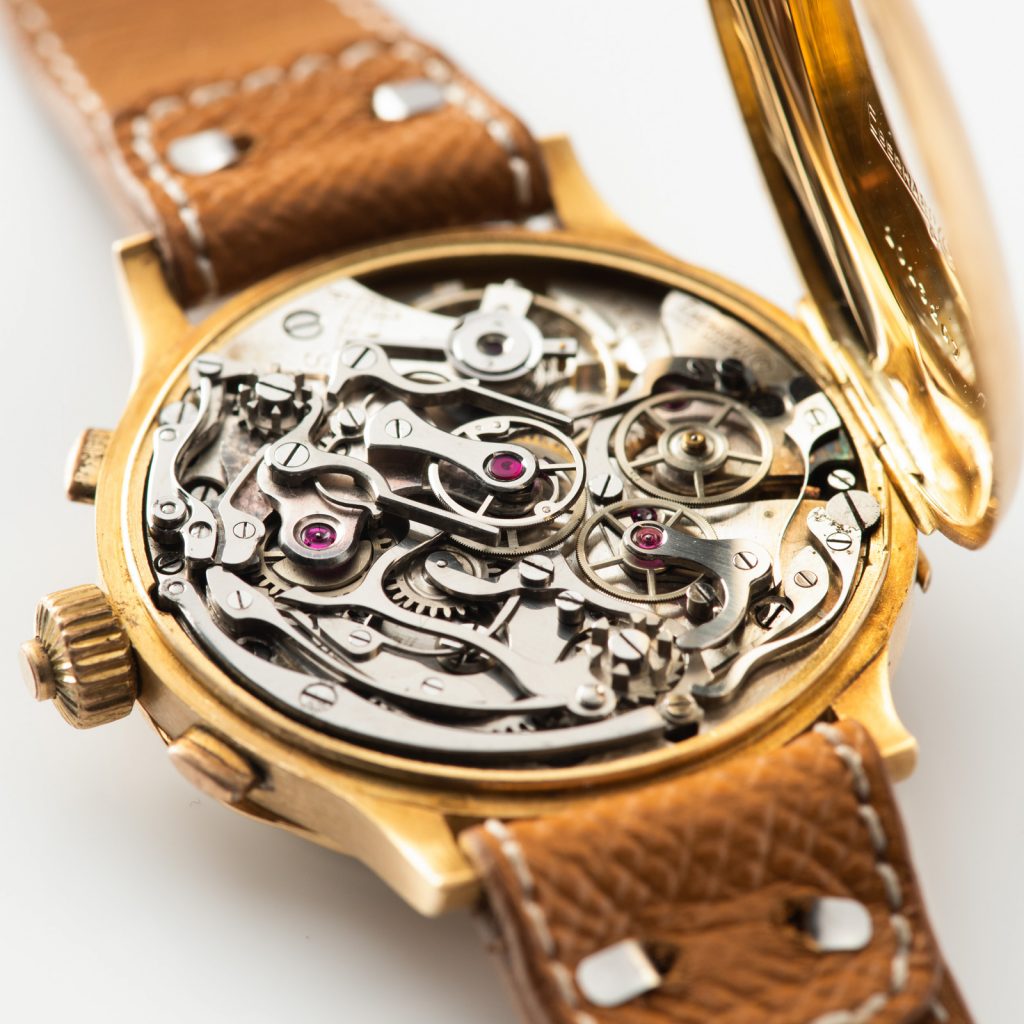
From a technical point of view, Eberhard chose to equip the newborn model with the Valjoux 65 calibre, on which it made some highly peculiar modifications, all aimed at accentuating its vocation as a professional instrument. First and foremost, it is equipped with a revolutionary solution for the time, namely the possibility of combining the stop and restart functions of the chronograph in a single push-button. Consequently, by pressing a pusher while the complication is active, the seconds sphere does not return to zero, but starts again from the beginning with a new measurement. In addition to this, the basic movement undergoes further work on the mechanical action by which the chronograph is stopped and restarted (within the same counting period).

All this translates into the replacement of the usual pusher at 4 o’clock with a “slide”. It does not act vertically, as is normally the case, but along the profile of the case and, depending on the direction in which it is pushed, it can stop or restart the chronograph. This contrivance allows the user not to lose the measurement should he or she accidentally press the button. Even today, after almost eighty years and in the face of sophisticated modern solutions, one cannot help but be amazed by the attention to detail and the effort put into creating a true “tool watch” ante litteram. So much attention was paid to the ebauche Valjoux that Eberhard gave it its own denomination, i.e. cal. 16000.
As far as dials are concerned, the choice is truly vast, but all have similar graphic characteristics. The very first examples recall the previous tradition, through enamel dials, usually accompanied by Breguet numerals. An honorable mention goes to the enameled dials with multiple scales in different colors. After a brief running-in period, the canonical dials with a silvered brass base entered production, reaching us in colors ranging from white to salmon to black. Just as the movement is totally oriented towards practical use, the dial also fully satisfies the needs of users. In fact, almost all of them show both the tachymetric and telemetric scales and, in rare cases, also the pulsometric one. In addition, they may present alternatively two (in the first production) or three counters (from 1938).
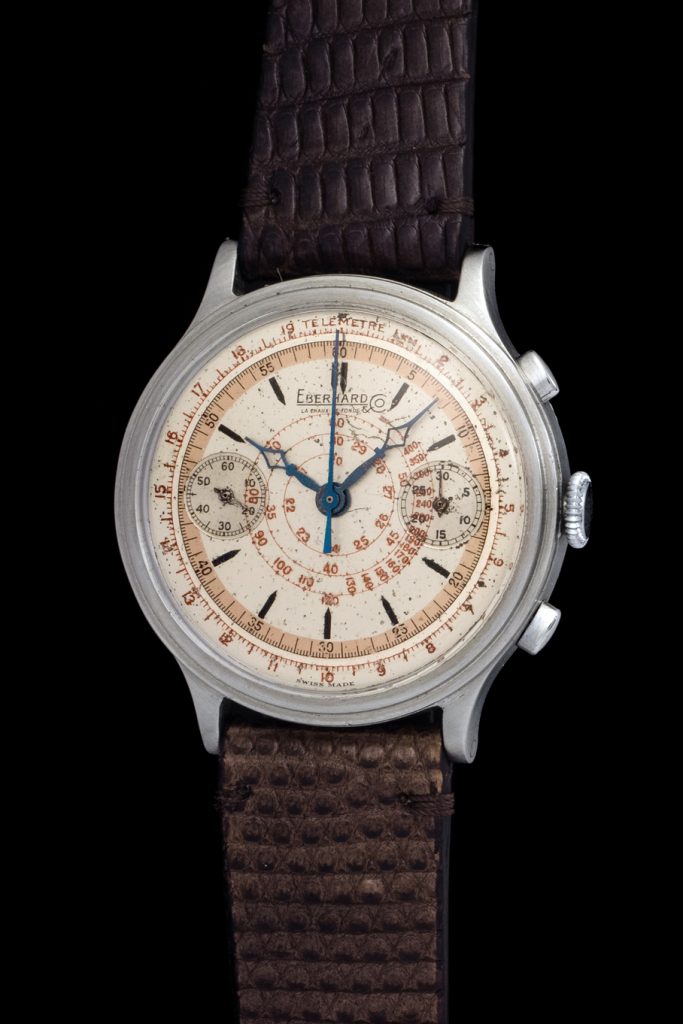
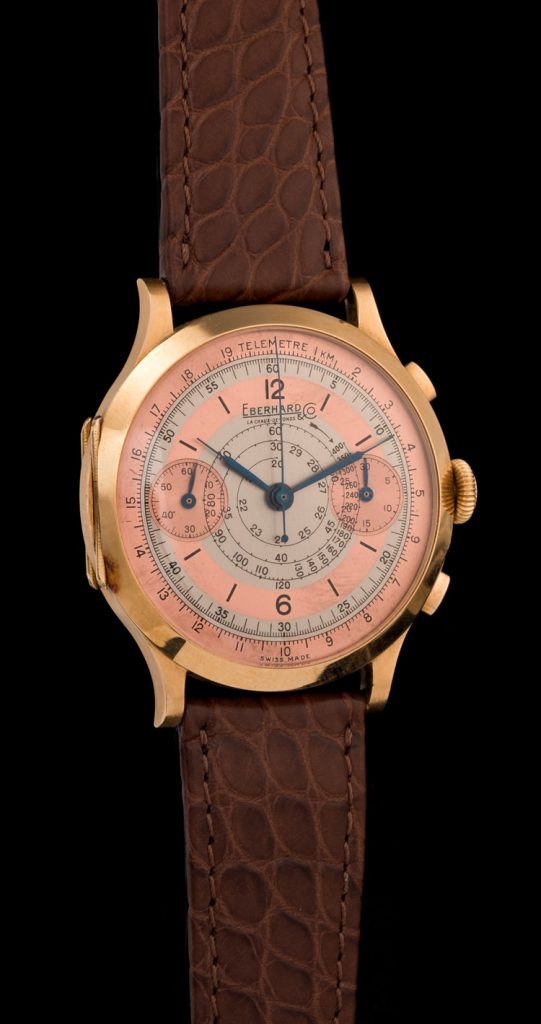
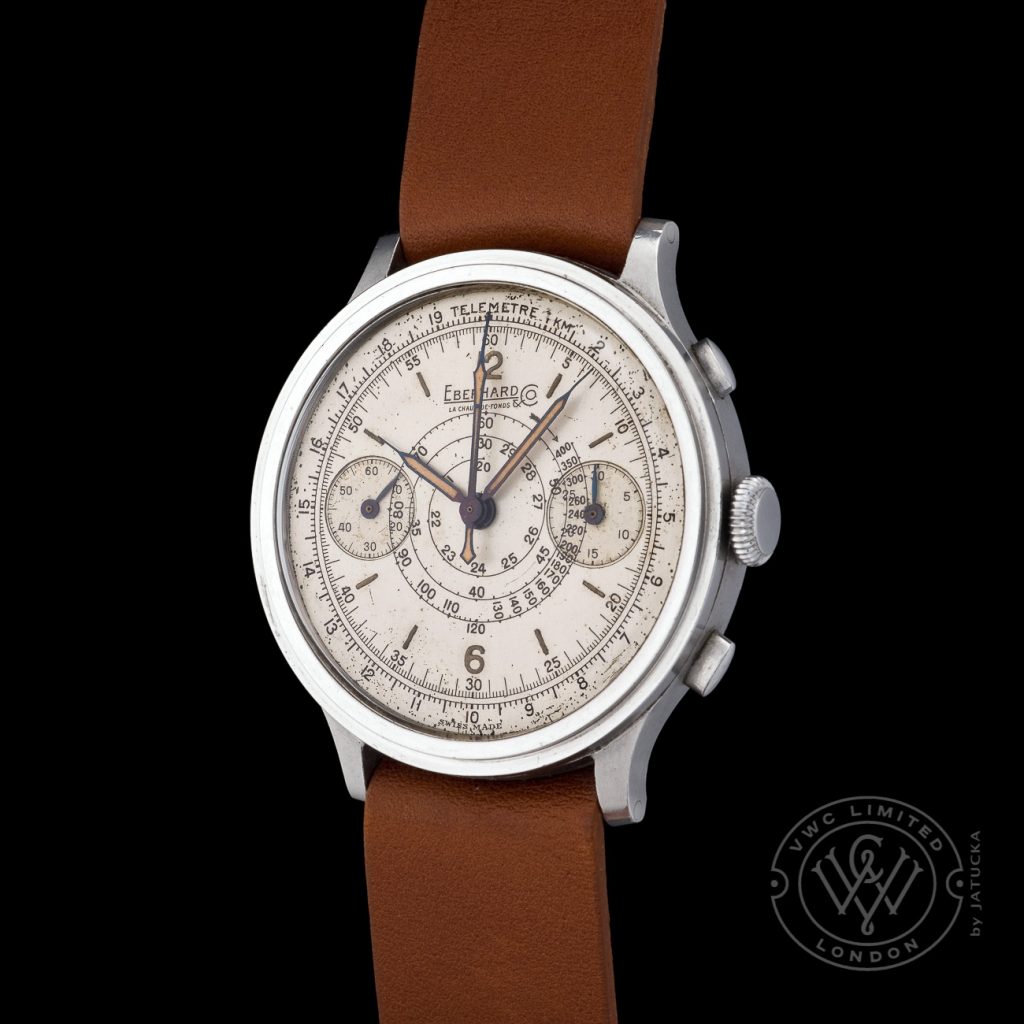


The addition of the hour counter marks another indelible page in watchmaking history, as it was Eberhard who first introduced it on a wristwatch model. The feature that has contributed most to the attractiveness of the Pre-Extrafort, in the circle of collectors, is certainly the size of the case. In fact, it is 40mm, a truly significant size for the time, which gives the dial a leading role within the timepiece. This, together with the perfectly balanced aesthetics, makes the Pre-Extrafort one of the milestones in the field of chronographs, as well as an object of great collectors’ interest.
The Pre-Extrafort rattrapante: the pinnacle of Eberhard production
The rattrapante embodies the epitome of the company’s philosophy, the creation that most elevates the vision of its founder George-Emile Eberhard. Launched in 1939, the new model once again adopted a Valjoux caliber, this time named cal. 55VBR, and became part of the very narrow circle of timepieces with a rattrapante function. In fact, at the time, only one other brand included this complication in its catalog, and therefore produced it in series. We are talking about Patek Philippe, with whom Eberhard is certainly proud to join in this primacy, since the former is probably the largest watchmaking company in history.
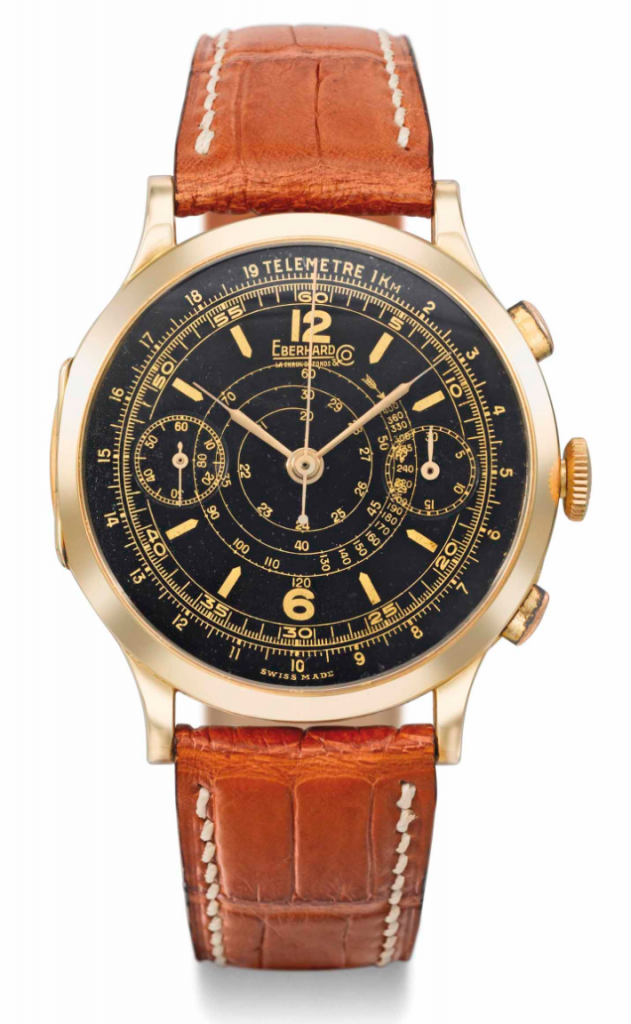
Often associated with racing, sometimes with aeronautics, it is certain that the Pre-Extrafort rattrapante embodies the ideal trait d’union between elegance and sportiness, two traits that had never before come together so harmoniously in that period. Also in this instance, the case, hinged in the gold models, has a diameter of 40mm and the dial usually bears a telemetric or tachometric scale. The latter can take various colors, with the black one standing out in terms of charm and desirability.
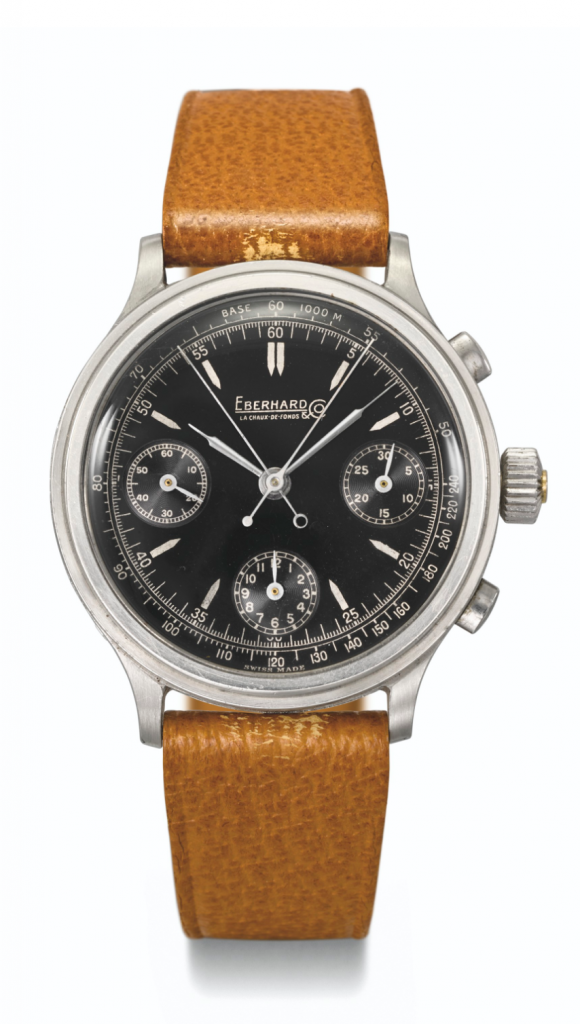

From the collectors’ point of view, the Pre-Extrafort embodies an object of the highest profile, whose quotations have undergone a significant increase in recent years. Moreover, given the difficulty in realizing the rattrapante complication, production was extremely limited, making it one of the most difficult chronographs to find on the market. In light of this, it is easy to understand the reason for the current quotations of between 50 and 80,000 euros, which make the model a choice of taste and perspective.
Eberhard and the Air Force: the Magini rattrapante
The collaboration between Eberhard and the Italian army describes an event that goes beyond the world of watchmaking to find a place in the pages of contemporary history. In 1942, in the middle of the Second World War, Italy realized that the Allies had decrypted the codes used to communicate with the Germans and the Japanese. In order to establish a new code shared by the Axis powers and designate an air route, 5 Italian aviators undertook a heroic flight to Tokyo, whose greatest difficulty was the impossibility of communicating with the ground. They left on June 29th 1942 and landed in Tokyo on July 3rd. The only instruments capable of establishing the correct route were two timepieces.
The first was a Longines Lindbergh, equipped with a time-angle display, while the second was an Eberhard pocket watch with month, date and rattrapante function. The latter was essential for keeping track of the time and numerous measurements needed to establish the correct direction in which to steer the aircraft. Besides the Eberhard signature, the dial bears the inscription: “Sistema Magini”, in honor of one of the expedition’s members, Publio Magini. In addition, it has a 24-hour indication, instead of the more usual 12-hour one, another peculiarity that facilitated operations during the mission.
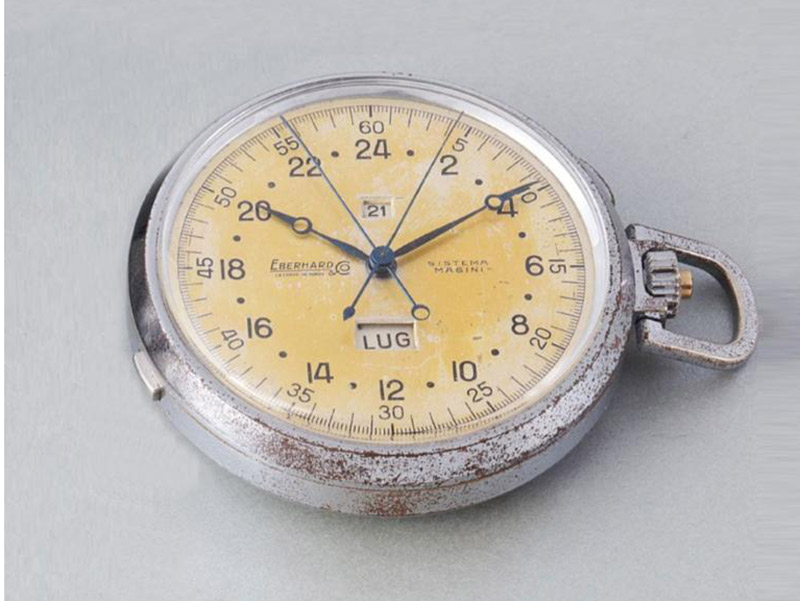
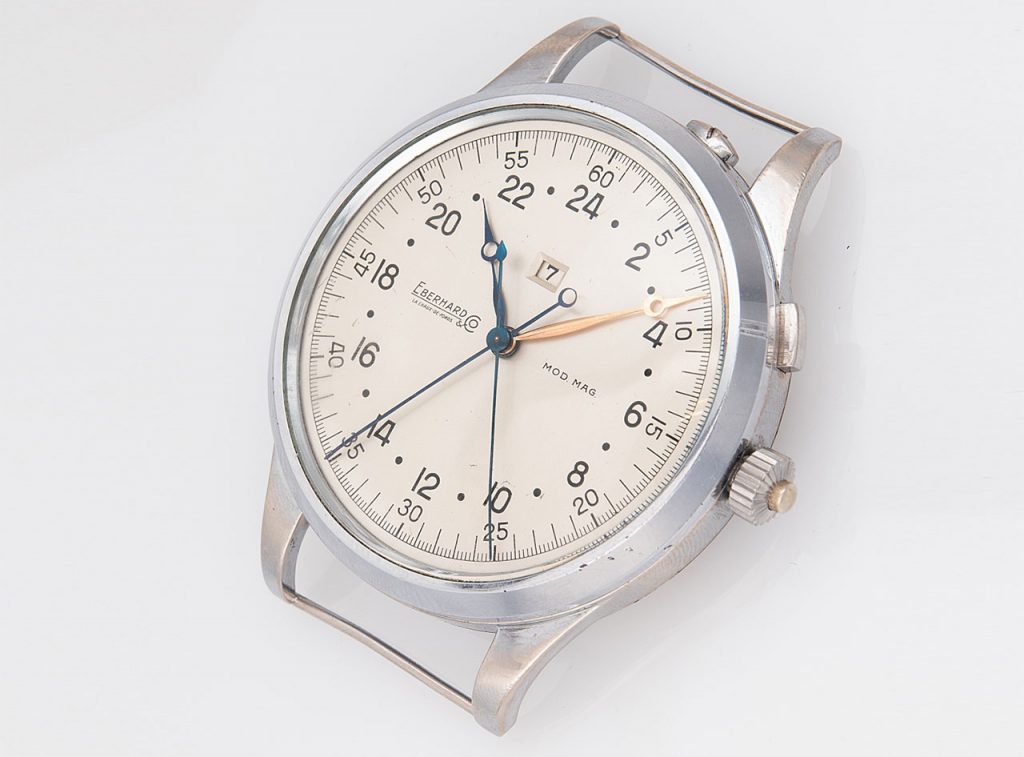
The timepiece has numerous buttons for adjusting the various functions: on the crown is the coaxial button for the time, at 4 o’clock you will find the button to operate the chronograph, while at 16 and 24 o’clock respectively are placed the date and month regulators. In addition to the original specimen, witness to the audacious mission, Eberhard supplied the Italian Air Force with other similar watches, both pocket and wrist, all bearing the Magini name on the dial. This name could be preceded by “sistema” or “mod” and in the latter case the name was also abbreviated, becoming “Mod. Mag.” For pocket watches, there are some without rattrapante, but all bore a 90-degrees rotated dial relative to the crown.
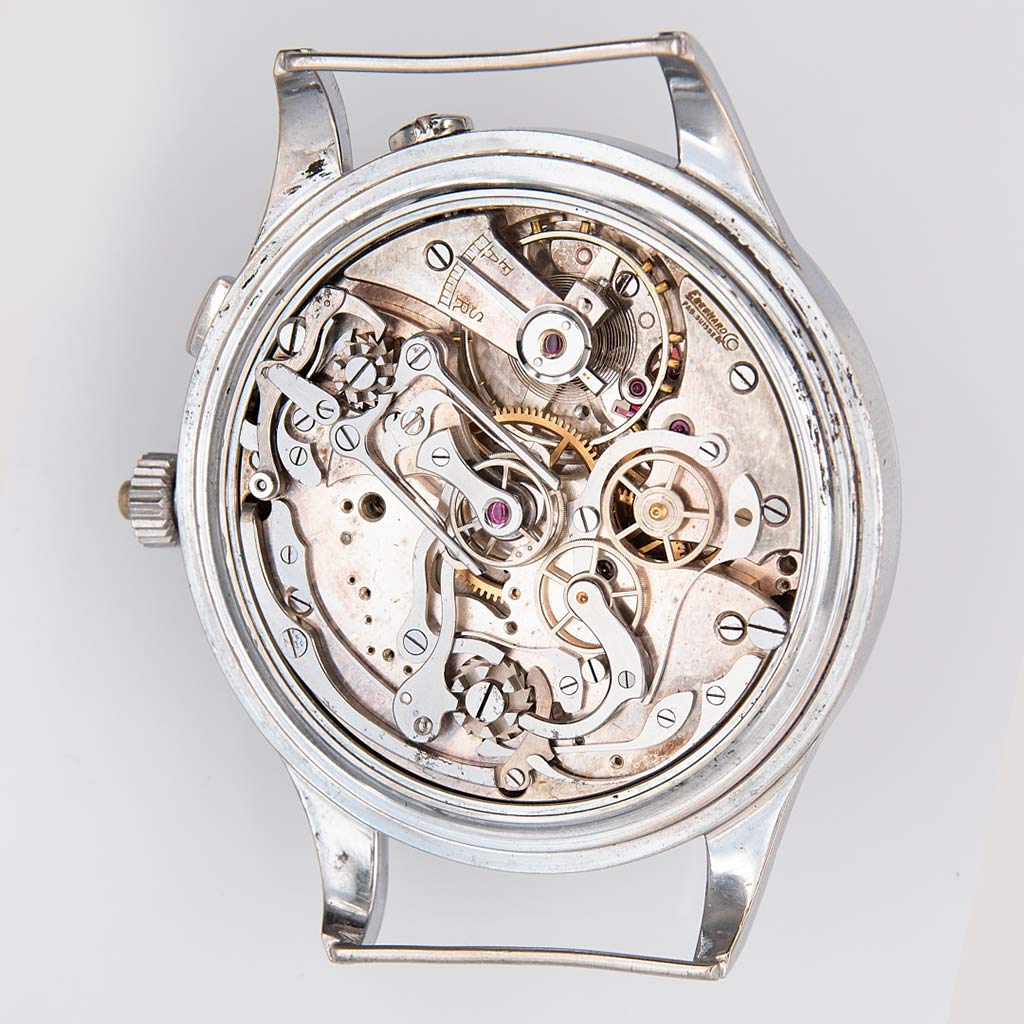
Regarding wrist specimens, only 3 are currently known, one of which was converted by welding lugs ex novo. In 2019, Bolaffi offered one of these specimens for auction, which attracted enormous interest from collectors and others, reaching a price of 156,000 euros.
The constant evolution to which a brand that pursues excellence must be subjected should in no way undermine its primordial nature. This very principle seems to be the fil rouge that has guided the work of Eberhard during its long and prosperous history, in which it has reached peaks that are difficult for many to reach.
Scholars and horology enthusiasts have never doubted the indispensable historical relevance of Eberhard, especially the magnificent Pre-Extrafor, and neither have we. For this reason we are pleased to offer our customers a careful selection of the most beautiful specimens that you can discover in our Collection. Should you have any special requests, please do not hesitate to contact our experts to find together the best solution to your needs.
written by Lorenzo Rabbiosi